Selasa, 17 November 2009


Still the big question: Was Major Hasan on antidepressants?

I just finished reading former mayor Rudy Giuliani's statement with regard to the recent Fort Hood massacre, wherein he appeared to be equating what happened at Fort Hood with what happened on 9-11. "[A] week ago we had another Islamist terrorist attack on our soil..." Come on, Rudy. Was the tragic massacre at Fort Hood really an Islamist terrorist attack? I myself have another theory about what happened at Fort Hood -- one that is much more plausible than Rudy's.

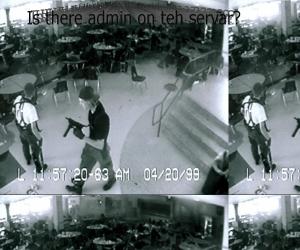
The recent Fort Hood massacre seems to more closely resemble what happened at Columbine High School and Virginia Tech than what happened at the World Trade Center, London, Madrid or Mumbai. Perhaps the reason for the logistical similarities between the massacres at Fort Hood, Columbine and Virginia Tech might be because Major Malik Hasan -- like Columbine shooter Eric Harris and Virginia Tech shooter Seung-Hui Cho -- could also have been taking antidepressants at the time he went postal.

"But can you back up that statement with facts, Jane?" you might ask. No, not exactly. We will have to wait until the Department of Defense releases that information before we will know for sure. But just think about it for a moment.

Major Hasan was a psychiatrist. And most people these days know that psychiatrists are basically glorified pill pushers. Was Hasan himself also taking the meds that he allegedly was dispensing to others on a daily basis? Was this a case of "Physician, heal thyself"?

And almost everyone -- even Google -- knows that violent and/or suicidal tendencies are the all-too-common side effects of taking antidepressants. Look at the Red Lake shooter. Look at Kip Kinkel in Springfield. Look at the Omaha Mall shooter. Look at the Camp Liberty shooter. Look at the Fort Carson shooters. And although the medical records of Dylan Klebold may never be released, I will bet you anything (within reason) that he was taking antidepressants too.

But almost no one knows for certain whether or not Hasan was taking antidepressants. That would be some very interesting information that I would love to see come out at Hasan's trial. Were the 12 dead soldiers and 31 wounded GIs at Fort Hood just several more victims of antidepressant side effects? We may never know -- but I for one would be very interested in finding out if Hasan's blood contained traces of antidepressants -- just as the Columbine shooter Eric Harris's blood contained the antidepressant Luvox.

Perhaps it it time for Americans to focus more on fearing Big Pharma than on fearing terrorists. As things stand now in America, it is more likely that you will be killed by a crazed gunman on antidepressants than by a terrorist.

To see my latest video (wherein I recommend spending a day at Capitola beach instead of taking antidepressants), click here: http://www.youtube.com/watch?v=bwAvjTTtMEc

PS: I just went to this month's meeting of the Berkeley-Albany Bar Association (they had pumpkin pie for dessert, my favorite!) and a judge from the federal Ninth District court gave a talk about the inequities of enforcing the death penalty. "There are so many opportunities for inequities to happen," he said, "that expecting to have all these inequities straightening out at all the levels involved, including police, prosecutorial, judicial and gubernatorial levels, would be like expecting us to learn Japanese by New Years."

After finished his talk, I asked the judge if he knew if committing murder while under the influence of prescribed medications might preclude giving said murderers the death penalty. The judge replied that he himself was not familiar with any rulings to that effect. But the judge's talk got me to wondering if Major Hasan might be able to avoid the firing squad by having his attorney plead this technicality on his behalf. However, I have no idea what U.S. military law might have to say with regard to this matter.

PPS: After I had finished writing this essay, I e-mailed my resident expert on the negative side-effects of antidepressants. Dr. Gary Kohls. "I'm currently writing about Major Hasan at Fort Hood with regard to the possibility that he might have been on antidepressants at the time he went postal. Do you have any further information about that?"

"Funny you should ask," Dr. Kohls answered back. "I just wrote my weekly newspaper column on that very same subject." And here it is:

Duty to Warn:
The Fort Hood Murders/Suicide (Attempt) and the Taboo Question: What Psych Drug(s) Was Hasan Taking (or Withdrawing From)?


Most of us have been listening to the massive, round-the-clock press coverage of the latest mass shooting incident at Fort Hood, Texas. Seemingly all the possible root causes of such a horrific act of violence have been raised and discussed. However, there is an elephant in the room, and it’s something that should be obvious in this age of the school shooter pandemic.


We should be outraged at the failure of the investigative journalists, the psychiatric professionals, the medical community and the military spokespersons who seem to be studiously avoiding the major factor that helps to explain these senseless acts. Why would someone unexpectedly, irrationally and randomly shoot up a school, a workplace or, in this case, an army post? Why would someone who used to be known as a seemingly rational person suddenly perpetrate a gruesome, irrational act of violence?


The answer to the question, as demonstrated again and again in so many of such recent acts of “senseless” violence, is brain- and behavior-altering drugs.


There are, of course, a multitude of personal factors, each of which could be responsible for tipping the troubled Army psychiatrist over the edge. This could include his religion and his ethnicity, which may have targeted him for ridicule in his Army community, his training as a soldier, his familiarity with firearms, his easy access to lethal weapons, his opposition to the wars in Iraq and Afghanistan and his profession as a psychiatrist, which exposed him to many posttraumatic stress disordered soldiers (exposure to which is known to be capable of causing secondary PTSD in therapists).


The huge missing “elephant,” however, is the high likelihood that Dr. Hasan was medicated with potent brain-altering psychiatric drugs. These would be drugs that Dr. Hasan had easy access to and which he was probably prescribing widely to his psychologically-traumatized soldier-patients, unaware of the serious dangers to them or to himself. These popular, aggressively marketed, highly profitable drugs are known to cause a number of serious adverse effects including hostility, suicidality, sleep alteration, depression, mania and psychotic episodes, among many other psychotoxic and neurotoxic effects, including the potentially lethal “I don’t give a damn” attitude so common among adolescent users of antidepressant drugs.
Obviously, not everyone who takes these drugs commits such horrific crimes, but these drugs affect different people differently, and some have radically adverse side effects immediately, some come later, and it is impossible to predict who may have such a reaction.


Dr. Hasan may not have been aware that the major common denominator in the vast majority of the infamous “school shooters”, from Columbine shooter Eric Harris, to Red Lake shooter Jeff Wiese, to the Virginia Tech shooter Cho has been the use of prescription “antidepressant” drugs like Luvox, Prozac, Zoloft and Paxil. But antidepressants aren’t the only culprits, and school shooters aren’t the only victims of the drugs (see www.ssristories.com for over 3,000 examples of similar stories about antidepressant drug-induced violent behaviors). Modern-day psychiatric drugs are notorious for causing people to numb down, to become indifferent to the suffering of others and themselves, to become manic, depressed, psychotic, irrational, impulsive, anorexic or demented. It is important to note that Fort Hood has been averaging ten suicides a month among military personnel.


The important new book, "Drug-Induced Dementia: A Perfect Crime," written by psychiatrist and scholar Grace E. Jackson, proves that every category of psychiatric drugs (antidepressants, tranquilizers/sedatives, psychostimulants, “mood stabilizers
” and antipsychotics) is fully capable of causing both short-term and long-term brain damage, with serious neurodegenerative, behavior-altering and emotion-numbing effects. Jackson’s information is gleaned from the vast neuroscience and neurotoxicology journals, information which is almost never published in the mainstream medical literature that clinicians are likely to read.


Jackson’s book is a sobering revelation that will be unwelcome news to those industries that are “too big to fail”: mainstream psychiatry and the pharmaceutical companies. These two industries have been either ignorant of these realities or have been withholding the information, despite the fact that the neurotoxicology data has been published in basic neuroscience journals ever since the 1960s, when the chronic use of Thorazine and Haldol were proven unequivocally to cause brain damage in high percentages of users.


In addition to Dr. Jackson’s books (she also has written a powerful expose of psychotropic drugs entitled "Rethinking Psychiatric Drugs"), psychiatrist Peter Breggin (
www.breggin.com and www.icspp.org) has been writing frequently about the phenomenon of drug-induced mental ill health and drug-induced brain-damage for two decades. Breggin’s well-written, well-researched and well-documented books include "Toxic Psychiatry; Your Drug May Be Your Problem"; "Brain-Disabling Treatments in Psychiatry"; "The Antidepressant Fact Book; Talking Back to Prozac"; "Talking Back to Ritalin"; and the book most pertinent to the issue of psychotropic drug-induced mental dysfunction, "Medication Madness: A Psychiatrist Exposes the Dangers of Mood-Altering Medications".


Dr. Breggin recently wrote an article about the Fort Hood shooting episode that was entitled “The Fort Hood Shooter: A Different Psychiatric Perspective”. I have excerpted portions of Breggin’s article immediately below because Dr. Breggin has the wisdom and experience to speak authoritatively on the subject. The article can be accessed in its entirely at: http://www.huffingtonpost.com/dr-peter-breggin/the-fort-hood-shooter-a-d_b_349651.html.


Breggin writes about the above-mentioned “elephant in the room”: Some in the media have expressed surprise that a man whose profession is about caring would turn to violence. According to one theory, Dr. Hasan was driven to the breaking point by the stress of counseling returning soldiers and having to listen to their horrific stories. Totally false. Psychiatrists are no longer trained to listen to or to counsel their patients. Nor do they care to.


“I've given seminars to the staff at both hospitals where Hasan was trained, Walter Reed in DC and the national military medical center in Bethesda, Maryland. The psychiatrists had no interest in anything except medicating their patients.


“Modern psychiatry is not about counseling and empowering people. It's about controlling and suppressing them, and that's a dismal affair for patients and doctors alike. The armed forces have been taken in by the false claims of modern psychiatry.


“By contrast, it's not depressing to do psychotherapy or counseling. As therapists, it's inspiring when people entrust their feelings and their life stories to us. There is no burn-out when therapists feel concern and empathy for their patients and help them to find the strength and direction to reclaim their lives.


“But being an ordinary (ie, a psychiatric drug dispensing) psychiatrist is deadly depressing. Psychiatrists routinely commit spiritual murder by disregarding and suppressing their patients' feelings and even their cognitive functions, making it impossible for them to conquer their emotional struggles. It's no wonder my colleagues have such high suicide and drug addiction rates.


”The most recent data show that soldiers are being snowed under not only with antidepressants and tranquilizers, but increasingly with antipsychotic drugs like Risperdal, Zyprexa, Geodon and Seroquel. To cover up their own therapeutic impotence, psychiatrists chemically suppress our troops and push them back onto the front lines. That's the kind of poisonous psychiatry that Hasan was practicing….


Self-Medication Rates Among Psychiatrists


To continue quoting from Dr. Breggin’s article: ”Psychiatrists are notorious for treating themselves with psychiatric drugs. They have them freely available and they simply don't know anything different. The odds are that Dr. Hasan was self-medicating with antidepressants and tranquilizers that were causing his increasing disinhibition, at least in his pronouncements, until his final “Allahu Akbar” before he began shooting.


“In my book '
Medication Madness,'
I describe dozens of cases that I have personally evaluated involving relatively normal individuals who committed murder, mayhem and suicide while taking psychiatric drugs, especially antidepressants and tranquilizers. One of these cases involves a psychiatrist who began by self-medicating himself, then came under another psychiatrist's care who continued to give him antidepressants, until he ended up in a manic state, assaulting a helpless woman. Before being driven mad by antidepressants, he was a relatively stable and highly accomplished doctor with no special inclination toward violence. These psychiatric drugs will have an even greater triggering effect on someone like Hasan who was already ideologically and psychologically primed to explode in violence.

Failing to Identify His Dangerousness


”Dr. Bart Billings is the founder and director of the premier International Combat Stress Conference, where I made a presentation last year. Dr. Billings, a retired colonel, is not surprised that Hasan's psychiatric colleagues failed to realize how crazy and ideologically menacing he had become. Dr. Billings confirms that army psychiatrists are nothing more than pill pushers who have no idea how to evaluate anyone's mental condition. He also agrees that it's criminal to prescribe psychiatric drugs to active duty soldiers, increasing the risk that they will break under stress and lose their self-control.


“It's time for the army to reject the false promises and damaging effects of modern psychiatry, and to focus on psychological, educational and moral approaches that genuinely help soldiers to prepare for and to overcome the effects of combat stress.”


Dr. Hasan’s case is a good example of murder/suicide. His behaviors in the days leading up to the event were compatible with suicidal intentions. He was emptying out his apartment, giving away his possessions and saying goodbye to friends and acquaintances, even though his date of deployment was days away. He knew he wasn’t coming back from his planned deed.


Even though his brain was not operating rationally, he knew that he would not get away with the murderous acts without getting shot, probably fatally. The phenomenon known as “suicide by cop” probably applies in this case. When humiliated, angry, hopeless and often suicidal men decide that they need to get revenge against a person, a group or a culture that has been tormenting them unjustly, they often want to go out in a “blaze of glory”, taking as many of their perceived tormentors as possible along with them. Ending their hopeless and despairing lives that way will ensure that they will be remembered as someone that wasn’t a nobody and wasn’t somebody deserving of disrespect and scorn.


Powerful forces will be operating behind the scenes at Fort Hood. Secrecy will prevail. There will be attempts to suppress important information about any drug use by Hasan or about the suicidality-inducing drugs he prescribed to his already psychologically-wounded soldiers. It is possible that the medical records will be sealed, claiming privacy concerns, as in the case of Columbine co-shooter Dylan Klebold. We need to demand a thorough, transparent investigation of all factors, especially those factors that may not be appreciated by the groups that would prefer a cover-up. The victims, both current and future ones, have a right to know the whole truth, if for no other reason than for society to be able to plan effective preventive strategies for the future.


Dr. Kohl's article can be accessed at http://www.unobserver.com/layout5.php?id=6857&blz=1.


PPPS: Even though I am almost certain that the horrible Fort Hood massacre was a result of Major Hasan having been on too many medications, let's also take a closer look at why Muslims might actually be angry enough to kill Americans. Maybe it's the injustice, stupid.

Here's just a small example of injustice toward Muslims: According to David Pratt, foreign policy editor for Glasgow's Sunday Herald and author of "Intifada: The Long Day of Rage," people all across the world happily celebrated the destruction of the unjust and inhumane Berlin Wall recently, but nobody seems to be protesting Israel's inhumane and unjust barrier Wall. http://www.heraldscotland.com/comment/guest-commentary/berlin-wall-is-gone-but-israel-s-inhumane-barrier-still-stands-1.932163

"What was amazing about the Berlin jamboree..." wrote Pratt, "was that in the days leading up to and during the celebrations, scant mention was made of Israel’s illegal 'separation wall' which today, like its bygone equivalent, stands as a global symbol of repression. Why, on this grand occasion marking the end of the Berlin Wall, was there not more reflection or objection to the injustice caused by its contemporary counterpart? ....The double standards displayed by many world leaders this week keen to add their ringing endorsement to the inhuman and intolerant rule the Berlin Wall represented, while remaining steadfastly mute on Israel’s present-day incarnation, is shaming to them all."

Kamis, 12 November 2009


America's real national pastime: Snobbery & "Trading Up"

And you thought that BASEBALL was America's national pastime? Forget about that. America's real national pastime is snobbery. America's real national pastime is "trading up".
First you hang out with the popular kids in high school. Then you "trade up" to Paris Hilton and Bernie Madoff. And then you "trade-up" to Goldman Sachs, Halliburton and the White House.

If you are a shopaholic, you "trade up" from the Dollar Tree to WalMart to Saks Fifth Avenue.

If you are a wingnut, you "trade up" from Edward R. Morrow and Walter Conkrite to Rush Limbaugh and Fox News.

If you are a man, you keep your eyes out for possible trophy wives. And if you are a woman, you try to "marry up".

But what happens to all those poor nerdy schmucks like me who only want freedom, justice, world peace and the human race's evolution away from hatred and war? We get belittled and snubbed. "You buy your clothes at the Salvation Army, drive a hooptie, fight global climate change and speak to Black people who haven't graduated from Harvard? You want to save the whales? LOSER! Eeuuww."

If the really big players in America's real national pastime had been around 2000 years ago, they would have "traded up" from Jesus post haste. "Good grief," they would say. "The man is a CARPENTER, for Chrissake."

Here's a typical American "trading up" story that could have happened in your neighborhood (and probably did): An idealistic but rather low-income woman had a daughter who spent her whole life "trading up" -- both economically and socially. Even at an early age, she began to think up more and more excuses not to be seen with her lower-income mom. This daughter spent her entire childhood and adolescence cultivating friendships with rich people's kids; spent her 20s scheming on how to talk her mother into giving her the family's pitiful little inheritance when her grandfather died and keeping her mother away from the daughter's daughter in case her mother's idealistic influences might rub off; and then spent her 30s "marrying up". Now this daughter is really happy and busy living the American dream -- but didn't even invite her own mother to her (most recent) wedding.

And here's a typical American "trading up" story that could have happened on the national level (and probably did): The son of a U.S. president wanted to "trade up" to the position of president himself -- so he cheated on his election (in America today, "trading up" seems to justify anything). And once in office, he outright lied about a multitude of things in order to start some wars that took the lives of well over a million foreigners and over 9,000 Americans. But can you blame him though? He was trying to "trade up," which is an admirable goal.

And then just before his term of office expired, this guy apparently okayed the Gaza atrocities. Why not? Who would mind a thousand or so extra dead Palestinians? After all, his friends in charge of the bombings wanted to "trade up" too. And "trading up" is the best justification there is -- even if various bloody body parts of children are involved. Here's a video of Judge Richard Goldstone discussing the results of last year's Gaza "trading up":
http://www.bollyn.com/home#article_11471

What worries me most about this former "president" is that no one has heard anything about George W. Bush's efforts to "trade up" lately. That's scaring me. The man is a trader at heart, and the fact that we haven't heard anything about his trading activities lately is just plain scary. But maybe he's just on the down-low right now, busy "trading up" with the devil for the best place in Hell.

And here's another aspect of our "trading up" national pastime that really bothers me. Does having a conscience or having spiritual money-in-the-bank count for anything at all in America right now? "No." Yikes!

Being a good person used to be a very important American national pastime -- but not any more. Most of us have already let morality slide in favor of playing the "trading up" game. And as for the rest of us -- those of us who still keep trying to play according to the rules of old-fashioned morality? We are delegitmized, avoided and laughed at -- and sent down to the minor leagues.

PS: My daughter Ashley and I got bored just standing in line
at the DMV today and so, while we were waiting, I taught her a very simple way to clear up sinus congestion -- using Jin Shin Jyutsu, an ancient Japanese healing art. And here's the video demonstration we made, FYI. There were 200 people waiting in line ahead of us so I guess we could have made the video longer, but the method really is very quick and easy. http://www.youtube.com/watch?v=NbPJQYDwWeM

PPS: Ashley just shot my video SIDEWAYS. As my director-producer, she is so FIRED.

PPPS: Here's an article about the history of US involvement in Helmand province back in the 1970s when Americans built a typical US city there. Fascinating. http://www.bbc.co.uk/blogs/adamcurtis/2009/10/kabul_city_number_one_part_3.html

Sabtu, 07 November 2009


Dickensian America: The "Haves" and the "Have-Nots"

I read somewhere recently, perhaps in Rolling Stone Magazine, that rap music was never the cause of violence, obscenity and despair in the ghetto -- but rather only its symptom. Did the ghettos of America start producing these shocking and ugly lyrics because the people who wrote them only wanted to be iconoclastic bad boys with hit albums under their belts? Or did they begin to write and sing these violent, stark and gritty lyrics because they reflected and described the actual harsh realities of their lives?

Did Charles Dickens write "Oliver Twist" first, causing 19th century London to attempt to become more like the city that Dickens had invented? Or was Dickens' book only describing symptoms that already existed?

Originally I started out here to describe some of the basic underlying causes of on-going bitterness that has been welling up in the hearts of many people in Israel-Palestine due to the grim contrasts between the wonderful freedom and abundance enjoyed by so many educated, well-off Israelis and the chained, controlled, life-threatening poverty endured by their Palestinian neighbors.

"The dramatic tide-line between wealth and poverty in Israel-Palestine seems to closely resemble the wealth-and-poverty tide-line that existed in the nineteenth century in Dickensian England," I told a friend yesterday. "It's like when poor orphaned Oliver Twist dared to ask for more."

Or else it's like when American Indians' lands were brutally stolen and they were herded like animals down all the roads and into reservations, where they lived in poverty and were severely cut off from any chance of having the freedom to search for a better life.

Many Israelis have swimming pools these days, while many Palestinians only have access to enough water to take one bath a week. Many Israelis have access to grand universities. Many Palestinian children go to sub-standard schools. Yes, it is very much like Dickensian England -- with its "Haves" and "Have-
Nots" living close enough to each other so that the "Have-Nots" can see the wealth and comfort and freedom of the "Haves" -- while Israeli neo-con characters similar to Mr. Limbkins laugh at them, call them outlaws and attempt to delegitimize them if they dare to say, "More, Sir?"

In fact, the whole Middle East appears to represent some sort of Dickensian tide-line, where the rich meet the poor -- and the poor refuse to shut up.

Then I got to thinking that perhaps America too has its "Haves" and "Have-Nots" -- with the terrible grinding poverty of the ghettos, where children join gangs, commit crimes and are tried as adults because there are so few other avenues open to them, acting harshly because their lives are so harsh.

And then I got to thinking about Wall Street and our recent
housing foreclosures and our current 10.2% unemployment rate and our decaying schools -- which are rapidly creating new kinds of "Haves" and "Have-Nots" in America. And then I started wondering, "Why is it only Palestinians, ghetto dwellers and Native Americans who are demanding access to more freedom, better education, better jobs and a bigger slice of the pie?"

Why are Palestinians, Native Americans and rap singers the only ones who are saying, "More, Sir?" Why aren't more Americans saying that too?

PS: When I asked baby Mena to help me out by making a video and saying, "More, Sir?" with regard to the new emerging Dickensian America, she said yes. But judging from the results, Mena must have thought that she was going to be on "America's Funniest Home Videos" instead. http://www.youtube.com/watch?v=PvMW2X52A7w

Senin, 02 November 2009


The special "Accidentally on Purpose" issue of my housing co-op newsletter

Well, it's been nine long years since my housing co-op first started work on its much-needed rehab. And while women may only take nine months to produce a baby, our board of directors has been taking nine long years to just to produce a rehab -- and at this point in time, they haven't even gone into labor yet!

This pregnancy analogy reminds me of that new TV sit-com wherein Jenna Elfman's character gets pregnant "accidentally on purpose". She takes the dread blue-stick test and discovers that she's pregnant! And she's not just partially pregnant. She's not just half-pregnant. She actually IS pregnant.

That's what our board of directors here at Savo Island Cooperative Homes needs to understand -- you can't just be half-rehabbed. You actually have to go ahead and give birth. And I have the water leaks running all down my walls from the last rain storm to prove it.

Actually, though, our rehab did go into false labor last August. Our board members met with HUD, some City of Berkeley representatives, our architect, our project manager, our lender, etc., and it was later announced that the rehab was actually going to begin in August of 2010 -- accidentally or on purpose! Whatever. As long as I finally get my roof fixed.

But then lately I've been hearing that some other issues have been come up and it now appears that our rehab's labor contractions have stopped again. Why? Could it be because the board, at this crucial moment, has decided to fire our current management company which is doing such a good job of pushing the rehab along, and to hire another management company instead? This brings the total number of management companies that Savo Island has gone through up to fifteen -- fifteen management companies that our board has either tried to hire but couldn't due to HUD ineligibility; hired only to have the management companies quit; or have been fired by the board. That averages out to a new management company every two years since Savo was first built. That's like changing doctors a whole bunch of times when one is pregnant. And to change management companies again now, at one of the most crucial points in our rehab? That's like firing your doctor while you are in the middle of giving birth.

But our board members claim that none of this delay is their fault. "It's all HUD's fault," they exclaim. Well guess what? That's like our board going around telling everyone, "That's not my baby."

But, actually, this overdue rehab isn't totally our board's fault. It is also the fault of the 57 families who live here, who receive incredible savings on their rents which allow them to live in homes that they could not normally afford, who give nothing back in return, who let this travesty and farce of a rehab go on year after year, who never go to board meetings, who keep re-electing the same ineffective board that apparently keeps allowing the rehab to stall "Accidentally on Purpose," who never run for a seat on the board themselves, who allow the same handful of self-interested board members to stay on the board for ten or fifteen years when all these families have to do is to look out their windows or up at their ceilings in order to see that something at Savo is radically wrong -- and who keep acting like this rehab isn't their baby either.

Elsewhere in the news at Savo Island, our board of directors has had a vacant board seat open now since April but no one on the board (except of course for me) seems to be trying to fill that seat in any hurry. In fact, no one even put this crucial item on last month's agenda. And when I brought the subject up at the last meeting, I was told, "We can't discuss that now! It's not on the agenda!" And did this particular error of omission on the last meeting's agenda happen "Accidentally on Purpose" too?

PS: Here's a video tour of one of the time-and-water damaged areas here at Savo, which will give you an illustration of why we so desperately need this rehab: http://www.youtube.com/watch?v=iVEGL9CbMZ0


Halloween in Berkeley: America at its best

I love politics because there is always so much skulduggery going on. Someone in Washington is always cheating and lying and robbing us poor taxpayers blind. And between all the terrible wars America has gotten itself into lately and our economic meltdown and the 44,000-plus Americans a year who die from lack of decent healthcare and the failure of America to educate its young, there are far too many things that are wrong with this country. I could write a whole book about America's shortcomings -- several books in fact.

But America for once has really gotten something right -- Halloween in Berkeley!

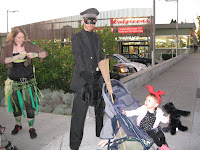
I took my two-year-old granddaughter Mena trick 'r treating this year and guess what? People all up and down the streets of Berkeley were laughing with joy and talking to strangers -- and no one was in danger and everyone was safe.

We stopped by the firehouse, where the firefighters were giving out candy. No one was scared of our police. They were everyone's protectors and neighbors. Yuppies came here from their suburbs over the hill and gangbanger types came up from the urban slums of Oakland and old people poured out of their rest homes in wheelchairs and Mexican-Americans spoke Spanish and little kids were EVERYWHERE -- and all were completely safe. What a night. Everyone smiled. There was an abundance of everything. Everyone here opened their homes and their hearts. It was just like back in the day before the advent of poverty, greed, separatism, military adventurism, hypocrisy, trickle-down theories, rampant homelessness, Wall Street bailouts and talk radio -- back when everyone in America used to care.

Halloween in Berkeley this year reminded me of everything that I love about America. Perhaps it might be a little bit weird to describe Halloween as a time when America is at its best -- but why not.

PS: Here's a video of us in our costumes, just starting out to trick 'r treat. "Ashley! Mena! Wait for me!" http://www.youtube.com/watch?v=u-uJeuxcX_4 And here's another video of us at the haunted house graveyard: http://www.youtube.com/watch?v=7wfZ7Ig4uBw

Kamis, 29 Oktober 2009


Afghanistan for Dummies, Part 2: Just say "No" to drugs -- and weapons

I just got an e-mail from my secret deep-throat covert expert source on Afghanistan and this was an occasion of note. "And why is that?" you might ask. Here's why. Unlike the many and various Washington "Deciders" that have vociferously held forth on the subject of Afghanistan since even before Charlie Wilson's War (including the terrible blunders Bush and Cheney committed before, during and after they bombed the crap out of Afghanistan), MY source actually knows what he is talking about. And so I have decided to do all these benighted Washington "Deciders" a big favor and let them in on the stuff that my favorite Afghanistan source has just revealed. And I'm going to call this instruction manual "Afghanistan for Dummies".

About three weeks ago, I found out that Prof. Peter Dale Scott, a noted Berkeley historian most widely known for his research into the JFK assassination, had begun doing research on the opium trade in Afghanistan. Hmmm. I want to know about opium in Afghanistan too! So I asked my covert source what he thought.

"In my own research," answered my source, "I have not looked at the opium trade -- mainly because others (such as Barnett Rubin at NYU's Center for International Cooperation) have already covered this field intensely. However, I have checked in on various urban sectors to see how the 'trade' is affecting urban development in Kabul, and the role seems to be indirect: People are using real-estate investments in Kabul as a way of laundering money, a pretty typical phenomium worldwide." Yeah. I've heard about that too. It appears to be going on in America as well.

"The two inferential bits that I can only speculate about are these," continued my source. "First, the U.S. started helping the Afghan mujahideen in the same years that the CIA in Central America started trafficking cocaine to help fund the Contras. That was exposed in the San Jose Mercury News -- so I'm pretty confident the CIA actually did that. They may have also set up opium-trafficking networks for the mujahideen at the same time. And those may still be the ones used."

That makes sense. If the CIA did it successfully in Latin America (and probably also in Burma) then what would keep them from trying the same thing elsewhere? Our fierce watchdog Congress? LOL.

"Second, an opium culture existed historically in Badakhshan Province (extreme NE Afghanistan), but not in south. Now, 70% of Afghan opium comes from Helmand Province, where there was no history of it before 2002. US has been in Helmand, both militarily and supplying rural-rehab aid, since 2002. Weird coincidence, if that is all that it is. Note that opium grown in the southern provinces seems to be trafficked out by Baluchi truckers who cross south into Pakistan, west into Iran, then through northern Iraq (Mosul) into Turkey, then to the EU. So, also weird that they can travel through US-occupied Iraq without trouble; but probably because traffickers are the least of American concerns in Iraq."

My source has come through again! Sort of.

Then my source gave me his "Afghanistan for Dummies" speech. Like Matthew Hoh, my source is truly concerned that America's biggest problem in Afghanistan is that Washington and the Pentagon don't really KNOW what their mission in Afghanistan actually is. To quote Hoh, "I have doubts and reservations about our current strategy and planned future strategy but my resignation is based not upon how we are pursuing this war but why and to what end. To put it simply, I fail to see the value or the worth in continued U.S. casualties or expenditures of resources in support of the Afghan government in what is, truly, a 35-year-old civil war." My source also asks the same question.

"What is the U.S. mission in Afghanistan? And, since we don't seem to have one, what should it be? Here are some of my brief recommendations: First, we need to completely distinguish our military mission from our humanitarian activism. Operationally, they are incompatible regardless of what we at home might feel about 'military humanitarianism'."

Next, my source suggests that we "distinguish the pursuit of transnational terrorism completely from counterinsurgency. I am not sure if we should even be fighting this counterinsurgency; however transnational terrorism remains a serious threat to domestic security."

Regarding the difference between transnational terrorism and counterinsurgency, Matthew Hoh also notes that it is a local insurgency by the Pashtuns that we are fighting, not Al Qaeda or the Taliban. "The US and NATO presence and operations in Pashtun valleys and villages, as well as Afghan army and police units that are led and composed of non-Pashtun soldiers and police, provide an occupation force against which the insurgency is justified. In both RC East and South, I have observed that the bulk of the insurgency fights not for the white banner of the Taliban, but rather against the presence of foreign soldiers and taxes imposed by an unrepresentative government in Kabul."

Then my recommends that, "the U.S. should seriously consider a 'development campaign' in Afghanistan. Oddly, we are used to the idea of a military campaign in other countries clear across the planet, which is a very difficult thing to accomplish and sustain. But we think that development interventions are too difficult. Okay, I accept the problem that significant cultural variation means you cannot feasibly do all aspects of development. But you don't need to (and shouldn't even try). There is actually a thick literature on this, which just doesn't get publicly discussed enough. So here I boil it down: Use the Human Development framework as a guide. Why? Because the United Nations Development Program has been refining this framework since 1990, and even the most rudimentary interpretation of the framework is useful."

Then my source offers up the following restatement of the U.S. mission in Afghanistan:

"First, we will raise the literacy rate by one percentage point per year. Second, we will raise life-expectancy by one percentage point per year.

"What would it take to meet these two targets? A lot of close involvement, yes; and it can be done in myriad ways, including many that are culturally sensitive! But rather than proximal goals (we built 250 schools! Only 100 have been blown up by insurgents!), it would mean actual change: prevalence of literacy. Instead of how many needles or pills or whatever the short-term metric of health aid might be, we should look at long-term, actual outcomes: Can Afghans expect to live longer? Longevity is influenced by many things, from de-mining to better nutrition to lower levels of domestic violence to healthcare. Tackling some or all of these in a culturally-respectful way is do-able."

Here comes the next chapter in my source's "Afghanistan for Dummies". It's long and I don't quite understand it all myself but here it is. "I have described this operation as a development 'campaign' because we are used to military campaigns, no matter how complex, expensive, and long-term they may be. Yes, a development campaign might cost several billion dollars a year in one small country. That seems expensive until it is compared to military campaigns."

I just read somewhere that it takes a million dollars a year to keep just one soldier in Afghanistan. A development campaign has GOT to be cheaper than that.

"And yet, I think it might achieve the same intended effect, as far as US congress and the American people are concerned: long-term improvement of domestic US security. If you finish your involvement in a country with a population who are healthier and more capable in their life-options, they are likely to remember that and have your back for at least a whole generation. Note that this is not a kumbaya argument: I would not argue to American taxpayers that we should help Afghans because it is the right thing to do in some abstract sense, or even appeal to our sense of loyalty by pointing out that Afghans bled for our sake as they demoralized the Soviets with their insurgency. But I would argue that major intervention to get their political economy back up and running is worth it for our own security. Even if the US is not likely to remain a hyperpower indefinitely, we are very likely to remain a major global player for the very long term. We need policies that match that understanding."

I can see what he means. According to Robert Parry, "As security worsens in Afghanistan and Pakistan, it is clear that al-Qaeda and its Taliban allies outwitted President [sic] George W. Bush and his neoconservative advisers by tying down U.S. forces in Iraq for five years while the Islamic militants rebuilt their forces for the war on their 'central front'.” And what is Al Qaeda's 'central front'? America, of course. So it could be very beneficial to our own security if we upped our "development campaign" in Afghanistan.

As for my own self, I am torn between the realization that America CANNOT afford to stay in Afghanistan -- because the money we are spending there is coming directly our of our budget for decent schools for our children. However. I sort of do want our troops to stay there because I have a dear friend in Kabul who somehow survived the Russian invasion, who somehow surrived Charlie Wilson's War and who somehow survived Taliban rule -- and I would hate to have anything violent and nasty happen to him now. And if it costs American taxpayers 100 billion dollars every few months just to keep my friend in Kabul safe, that's fine with me!

But wouldn't it be more cost-efficient if we could think of a better way to protect him -- and us -- than to spend a million dollars per year per soldier in Afghanistan? Maybe we could spend a thousand dollars per year per school over there instead? And perhaps a thousand dollars per year per school over here too?

PS: So. What can we expect things to be like in Afghanistan in 20 years if Washington and the Pentagon keep using their current policies and techniques? My guess is that the U.S. will be lucky if Afghanistan only resembles the Israel-Palestine situation right now -- an uneasy truce between the "haves" in charge and the "have-nots" in the occupied territories, draconionally maintained by an enormous outpouring of funds from American taxpayers, spent mainly on things like F-16s, drones, white phosphorus bombs, tanks and check-points the size of three football fields -- not to mention a Wall or two -- as these things become increasingly necessary to separate the "haves" in charge in Kabul from the "have-nots" in the occupied Pashtun tribal areas.

Yuck!